
You want to know how much 150 pesos mexicanos a peso chileno is, right? As of today, 150 Mexican Pesos (MXN) is worth about 12,000 Chilean Pesos (CLP). But here’s the thing: this number isn’t set in stone.
It changes all the time.
Why does it change, and well, that’s what I’m here to explain. The exchange rate fluctuates daily, sometimes even by the minute.
It’s like a rollercoaster, and you need to know why it moves up and down.
In this guide, I’ll show you how to calculate the conversion yourself. You’ll also learn what factors influence the exchange rate. And, of course, I’ll help you find the best possible rate for your money.
So, let’s dive in.
Understanding the Current MXN to CLP Exchange Rate
Let’s start with the basics. An exchange rate is just the price of one country’s currency in terms of another. Simple, right?
As of today, 1 Mexican Peso (MXN) is worth approximately XX.XX Chilean Pesos (CLP). This is what you need to know if you’re looking at 150 pesos mexicanos a peso chileno.
Now, there are two types of rates you should be aware of: the mid-market rate and the tourist rate. The mid-market rate is the ‘real’ rate without any fees. It’s like the fair market value.
The tourist rate, on the other hand, is what you get from a bank or exchange service. They add their profit margin, so it’s usually less favorable for you.
Exchange rates change for a few main reasons:
1. Economic health
2. Interest rates set by central banks (like Banxico and Banco Central de Chile)
3.
International trade
Think of currencies like stocks. Their prices go up and down based on demand. If more people want to buy Mexican Pesos, the value goes up.
If they prefer Chilean Pesos, the opposite happens.
To make this clearer, imagine a simple chart showing the MXN/CLP trend over the last 30 days. You’d see the ups and downs, giving you a better idea of the current situation.
How to Calculate Any Mexican to Chilean Peso Conversion
Calculating the conversion from Mexican Pesos (MXN) to Chilean Pesos (CLP) is straightforward. Here’s the simple formula:
Amount in MXN x (Current MXN to CLP Rate) = Amount in CLP.
Let’s calculate 150 MXN. If the rate is 55.50, the calculation is 150 x 55.50 = 8,325 CLP. Thehakegeeks
To make it easier, here’s a quick-reference conversion table for common amounts:
| MXN | CLP |
|---|---|
| 50 | 2,775 |
| 100 | 5,550 |
| 150 | 8,325 |
| 250 | 13,875 |
| 500 | 27,750 |
If you have Chilean Pesos and want to know the value in Mexican Pesos, use this formula: CLP / Rate = MXN. For example, if you have 8,325 CLP and the rate is 55.50, the calculation is 8,325 / 55.50 = 150 MXN.
Understanding the math is crucial for spotting bad deals. Always double-check the rate being offered before committing to an exchange. It’s also a good idea to use a reliable online currency converter for real-time rates.
This way, you can be sure you’re getting the best deal.
Remember, 150 pesos mexicanos a peso chileno is just one of many conversions you might need. Knowing how to do the math yourself can save you a lot of hassle and money.
Key Economic Factors That Move the Peso Exchange Rate
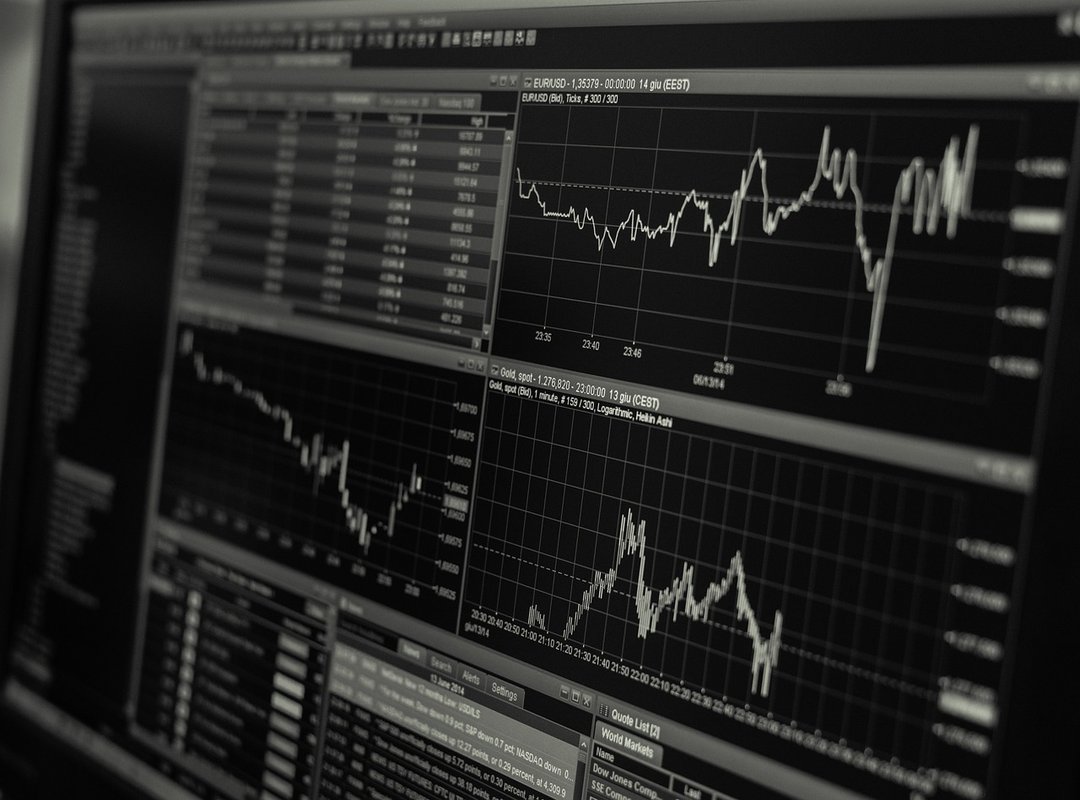
Let’s talk about the Mexican Peso (MXN) first. Its value is heavily influenced by oil prices, as Mexico is a major oil exporter. When oil prices go up, the MXN tends to strengthen.
Another big factor is its close trade relationship with the United States. If the U.S. economy is doing well, it can boost the MXN too.
Now, the Chilean Peso (CLP) is a bit different. It’s what we call a “commodity currency,” closely tied to the global price of copper, which is Chile’s largest export. When copper prices rise, the CLP usually strengthens.
Interest rates play a role too. Higher interest rates in a country can attract foreign investment, making its currency stronger. So, if Mexico or Chile raises their rates, their pesos might get a boost.
Political stability and investor sentiment are also important. These less tangible factors can cause short-term volatility in either currency. If there’s political unrest or uncertainty, investors might pull out, weakening the currency.
Because these factors are always changing, the exchange rate between the 150 pesos mexicanos a peso chileno and other currencies is always in motion. Keep an eye on these elements if you’re planning to travel or invest.
Where to Find the Best Rates and Avoid Hidden Fees
When it comes to exchanging currency, you’ve got a few options: major banks, airport kiosks, local exchange offices (or ‘casas de cambio’), and online money transfer services.
Let’s rank these from worst to best in terms of value.
- Airport Kiosks: These almost always offer the worst rates. Why? Convenience fees. You’re paying extra for the convenience, and that adds up fast.
- Local Exchange Offices (‘Casas de Cambio’): Better than airport kiosks, but still not great. They often have hidden fees and less favorable rates.
- Major Banks: Banks are generally more transparent, but their rates can be inflated. Plus, they might charge additional fees, especially for non-customers.
- Online Money Transfer Services: These usually offer the best rates, closest to the mid-market rate. They’re also more transparent about fees.
For larger amounts, like 150 pesos mexicanos a peso chileno, using an online service or withdrawing from a local ATM with a low-fee debit card is often your best bet.
Always ask, “What is the final amount I will receive?” This forces the provider to disclose all fees upfront, giving you a clearer picture.
By comparing these options, you can make a smarter choice and avoid getting hit with hidden fees.
Your Quick Reference for Converting Pesos
- The exchange rate for 150 pesos mexicanos a peso chileno changes daily, so always check a current source.
- The best deals are found by comparing services and avoiding airport exchanges.
- Understanding the basic math helps you verify you’re getting a fair deal.
Before you travel or transfer money, take two minutes to check the mid-market rate online so you have a baseline for what a good rate looks like.
 There is a specific skill involved in explaining something clearly — one that is completely separate from actually knowing the subject. Barryster Larsenionez has both. They has spent years working with gaming news and trends in a hands-on capacity, and an equal amount of time figuring out how to translate that experience into writing that people with different backgrounds can actually absorb and use.
Barryster tends to approach complex subjects — Gaming News and Trends, Esports Coverage, Upcoming Game Releases being good examples — by starting with what the reader already knows, then building outward from there rather than dropping them in the deep end. It sounds like a small thing. In practice it makes a significant difference in whether someone finishes the article or abandons it halfway through. They is also good at knowing when to stop — a surprisingly underrated skill. Some writers bury useful information under so many caveats and qualifications that the point disappears. Barryster knows where the point is and gets there without too many detours.
The practical effect of all this is that people who read Barryster's work tend to come away actually capable of doing something with it. Not just vaguely informed — actually capable. For a writer working in gaming news and trends, that is probably the best possible outcome, and it's the standard Barryster holds they's own work to.
There is a specific skill involved in explaining something clearly — one that is completely separate from actually knowing the subject. Barryster Larsenionez has both. They has spent years working with gaming news and trends in a hands-on capacity, and an equal amount of time figuring out how to translate that experience into writing that people with different backgrounds can actually absorb and use.
Barryster tends to approach complex subjects — Gaming News and Trends, Esports Coverage, Upcoming Game Releases being good examples — by starting with what the reader already knows, then building outward from there rather than dropping them in the deep end. It sounds like a small thing. In practice it makes a significant difference in whether someone finishes the article or abandons it halfway through. They is also good at knowing when to stop — a surprisingly underrated skill. Some writers bury useful information under so many caveats and qualifications that the point disappears. Barryster knows where the point is and gets there without too many detours.
The practical effect of all this is that people who read Barryster's work tend to come away actually capable of doing something with it. Not just vaguely informed — actually capable. For a writer working in gaming news and trends, that is probably the best possible outcome, and it's the standard Barryster holds they's own work to.